
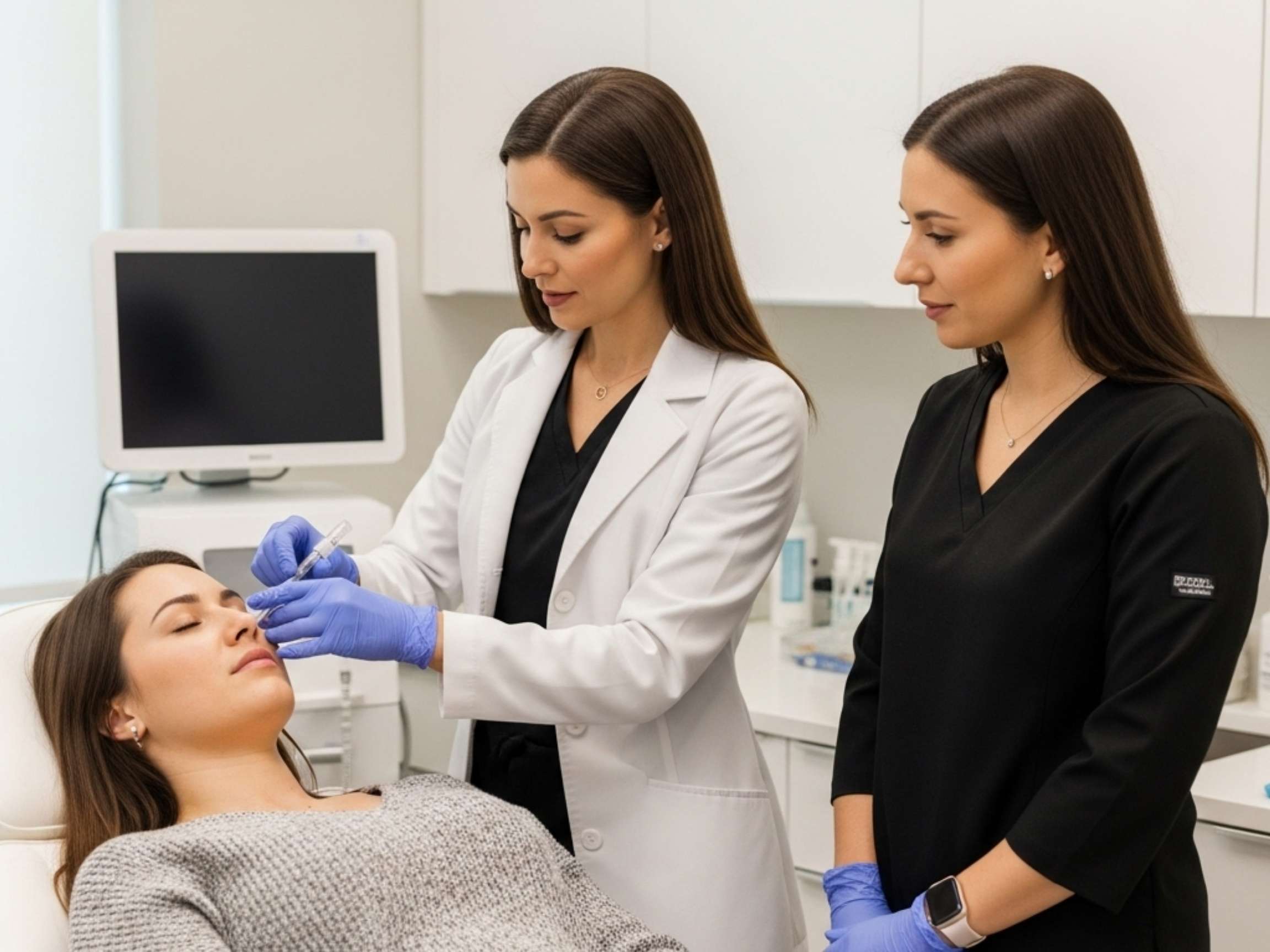
If you’re wondering how to become a medical esthetician, you’re not alone. Medical aesthetics continues to attract students looking for a rewarding career that combines advanced skincare, technology, and client care. Throughout Mississauga, Port Credit, Toronto, and the GTA, medical spas and aesthetic clinics continue to seek professionals with practical training and strong technical knowledge.
Becoming a medical esthetician involves more than learning individual treatments. You’ll need professional education, supervised hands-on experience, knowledge of skin science, consultation skills, and an understanding of Ontario’s professional expectations. This guide outlines each step of the journey—from choosing the right program to starting your career with confidence.
What Is a Medical Esthetician?
A medical esthetician is a trained skincare professional who performs advanced non-invasive aesthetic treatments designed to improve the appearance and condition of the skin. Depending on their education and workplace, they may provide services such as laser hair removal, chemical peels, microneedling, advanced facials, and skin rejuvenation treatments.
Beyond performing procedures, medical estheticians assess clients, develop treatment plans, educate clients on aftercare, maintain treatment records, and follow strict hygiene and safety protocols. Many professionals build successful careers in medical spas, aesthetic clinics, dermatology practices, and wellness centres throughout Toronto, Mississauga, Oakville, Burlington, Vaughan, Richmond Hill, Brampton, Milton, and across the GTA.
Step 1: Learn About the Career
Before enrolling in a medical esthetician program Ontario, take time to understand the profession and its responsibilities. Successful practitioners combine technical knowledge with strong communication skills, professionalism, and a commitment to ongoing learning.
Medical aesthetics is an evolving field, with new technologies and treatment techniques introduced regularly. Exploring different career pathways and treatment specialties can help you choose an educational program that aligns with your long-term goals.
Step 2: Enrol in a Medical Esthetician Program
Choosing the right medical esthetician school is one of the most important decisions you’ll make. Look for a program that combines classroom instruction with practical clinical education rather than focusing only on theory.
A comprehensive curriculum should include skin anatomy, client consultation, treatment planning, infection prevention, contraindications, professional ethics, and advanced aesthetic procedures. Programs that include supervised practical experience provide valuable preparation for working in real clinical environments.
Step 3: Gain Hands-On Training
Hands-on experience is one of the most valuable parts of medical esthetician training. While classroom instruction explains the science behind treatments, practical learning helps students develop confidence in real clinical settings.
Students should have opportunities to practise client consultations, skin assessments, treatment preparation, equipment operation, hygiene protocols, treatment documentation, and aftercare under instructor supervision. Working with professional aesthetic technologies also helps bridge the gap between theory and everyday practice.
When comparing schools in Mississauga, Port Credit, Toronto, and the GTA, look for programs that emphasize supervised practical learning rather than theory alone.
Step 4: Earn Your Diploma or Certification
After completing your education, you’ll receive a certificate or diploma depending on the program you choose.
A medical esthetician diploma generally covers multiple areas of medical aesthetics over a longer period, while individual certification courses focus on developing specific treatment skills. Regardless of the pathway, continuing education remains an important part of professional growth as new technologies and treatment protocols continue to evolve.
Students should also understand that completing a course does not automatically authorize every graduate to perform every treatment independently. Employer expectations, insurance requirements, and applicable Ontario regulations should always be reviewed before beginning professional practice.
Step 5: Understand Ontario Requirements
Medical aesthetics is a dynamic industry, and professional responsibilities can vary depending on the treatment being performed and the workplace.
Before beginning your medical esthetician career, become familiar with employer policies, equipment-specific training requirements, insurance eligibility, and applicable Ontario regulations. Maintaining high professional standards, following manufacturer guidelines, and participating in continuing education will help you build a safe and successful career.
Step 6: Start Your Career
Once you’ve completed your education, you’re ready to begin gaining professional experience. Medical estheticians may find opportunities in medical spas, aesthetic clinics, dermatology practices, wellness centres, and cosmetic surgery clinics throughout Mississauga, Port Credit, Toronto, Oakville, Burlington, Vaughan, Richmond Hill, Brampton, Milton, and across the GTA.
Many graduates continue expanding their skills through advanced education in laser treatments, microneedling, chemical peels, and other specialized procedures. Continuing to build your knowledge can broaden your professional opportunities and help you adapt as the aesthetics industry evolves.
Why Choose SOLSKIN Academy?
SOLSKIN Academy provides practical, career-focused education designed to prepare students for today’s medical aesthetics industry. The curriculum combines classroom learning with supervised hands-on training, allowing students to build confidence in client consultation, treatment planning, skin assessment, and advanced aesthetic procedures.
Students can further develop their expertise through the Medical Aesthetics Courses, Laser Hair Removal Course, Microneedling Course, Chemical Peel Course, and Basic Botox Course. Whether you’re beginning a new career or expanding your qualifications, SOLSKIN Academy offers a supportive learning environment for students throughout Mississauga, Port Credit, Toronto, and the GTA.
Conclusion
Learning how to become a medical esthetician begins with choosing the right education, gaining practical experience, and developing the knowledge needed to deliver safe, professional aesthetic treatments. From understanding skin science to mastering advanced technologies, every stage of your training contributes to building a successful career in medical aesthetics.
Whether you’re starting your first career or looking to expand your professional skills, investing in quality education can help you prepare for opportunities throughout Mississauga, Port Credit, Toronto, Oakville, Burlington, Vaughan, Richmond Hill, Milton, Brampton, and the GTA. With comprehensive training, hands-on experience, and a commitment to lifelong learning, you’ll be well-positioned to grow within Ontario’s evolving medical aesthetics industry.
Take Next Step
Explore medical esthetician courses, basic botox courses, laser hair removal courses at SOLSKIN Academy. Ready to get started? Head towards the academy registration page and register yourself and let our team build a treatment plan around your face, not a generic template. Contact SOLSKIN Academy and explore more.
Visit a nearby location:
- Lakeshore & Cawthra – 729 Lakeshore Rd E, Mississauga
SOLSKIN Academy proudly serves aspiring medical estheticians from Port Credit, Mississauga, Toronto, the GTA, Oakville, Burlington, Milton, Brampton, Vaughan, and Richmond Hill.
Frequently Asked Questions
-
How long does it take to become a medical esthetician in Ontario?
The length of training depends on the program you choose. Comprehensive medical esthetics programs typically include both classroom instruction and supervised practical training to prepare students for professional practice.
-
Do I need a diploma to become a medical esthetician?
Many employers prefer graduates who have completed a recognized medical esthetics program. Depending on your educational goals, you may earn a diploma or complete individual certification courses in specialized treatments.
-
What treatments does a medical esthetician perform?
Medical estheticians commonly provide non-invasive treatments such as laser hair removal, microneedling, chemical peels, advanced facials, skin rejuvenation procedures, and client consultations, depending on their training and workplace.
-
Can I specialize after completing my training?
Yes. Many professionals continue their education by taking advanced courses in laser technologies, microneedling, chemical peels, and other aesthetic procedures to expand their skills and service offerings.
-
Where can medical estheticians work?
Graduates may pursue opportunities in medical spas, aesthetic clinics, dermatology practices, wellness centres, cosmetic surgery clinics, and other professional aesthetic settings throughout Mississauga, Toronto, Port Credit, and the GTA.
-
Why choose SOLSKIN Academy?
SOLSKIN Academy combines comprehensive theory with supervised hands-on learning, experienced instructors, and career-focused education designed to prepare students for today’s medical aesthetics industry while supporting long-term professional development.
